|
|
| Acceptance of the World Heritage Convention |
June30,1992 |
|
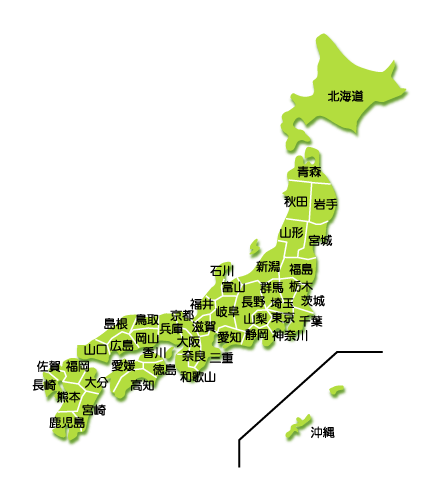
| Properties inscribed on the World Heritage List 16 |
|
| Natural 4 |
Prefecture |
Year |
| ●Shirakami-Sanchi |
Aomori/Akita |
1993 |
| ●Yakushima |
Kagoshima |
1993 |
| ●Shiretoko |
Hokkaido |
2005 |
| ●Ogasawara Islands |
Tokyo |
2011 |
|
| Cultural 12 |
Prefecture |
Year |
| ●Buddhist Monuments in the Horyu-ji Area |
Nara |
1993 |
| ●Himeji-jo |
Hyogo |
1993 |
●Historic Monuments of Ancient Kyoto
(Kyoto, Uji and Otsu Cities) |
Kyoto/Shiga |
1994 |
| ●Historic Villages of Shirakawa-go and Gokayama |
Toyama/Gifu |
1995 |
| ●tsukushima Shinto Shrine |
Hiroshima |
1996 |
| ●Hiroshima Peace Memorial (Genbaku Dome) |
Hiroshima |
1996 |
| ●Historic Monuments of Ancient Nara |
Nara |
1998 |
| ●Shrines and Temples of Nikko |
Tochigi |
1999 |
●Gusuku Sites and Related Properties of
the Kingdom of Ryukyu |
Okinawa |
2000 |
●Sacred Sites and Pilgrimage Routes
in the Kii Mountain Range |
Mie/Nara/Wakayama |
2004 |
●Iwami Ginzan Silver Mine and
its Cultural Landscape |
Shimane |
2007 |
| ●Historic Monuments and Sites of Hiraizumi |
Iwate |
2011 |
|
| Properties submitted on the Tentative List 12 |
|
●Temples, Shrines and other structures of
Ancient Kamakura |
Kanagawa |
1992 |
| ●Hikone-Jo (castle) |
Shiga |
1992 |
| ●The Tomioka Silk Mill and Related Industrial Heritage |
Gunma |
2007 |
| ●Churches and Christian Sites in Nagasaki |
Nagasaki |
2007 |
●Asuka-Fujiwara: Archaeological sites of
Japan’s Ancient Capitals and Related Properties |
Nara |
2007 |
| ●Fujisan |
Yamanashi/Shizuoka |
2007 |
| ●Main Building of the National Museum of Western Art |
Tokyo |
2007 |
●Jômon Archaeological Sites in Hokkaidô, Northern Tôhoku,
and other regions |
Hokkaido/Aomori/Akita/Iwate |
2009 |
| ●The Modern Industrial Heritage Sites in Kyûshû and Yamaguchi |
Kagoshima/Fukuoka/Saga/Kumamoto/Nagasaki/Yamaguchi |
2009 |
| ●Okinoshima Island and Related Sites in Munakata Region |
Fukuoka |
2009 |
| ●Mozu-Furuichi Kofungun, Ancient Tumulus Clusters (2010) |
Osaka |
2010 |
| ●The Sado complex of heritage mines, primarily gold mines (2010) |
Niigata |
2010 |
(Source)●UNESCO World Heritage Centre
●47 Prefectual Governments in Japan
|